Update date: 16 March 2026
Publish date: 6 March 2026
Read in: 11 min
Golfer’s elbow is caused by overuse of the tendons on the inner side of the elbow, leading to pain, weakness, and stiffness. People who play sports and manual laborers are most at risk for this condition. Properly conducted physical therapy is an effective method of treating golfer’s elbow. Learn about the symptoms, causes, and specific methods of rehabilitation for this condition.

Contents
Golfer’s elbow (also known as pitcher’s elbow or medial epicondylitis of the humerus) is inflammation, damage, degeneration, or microtrauma of the tendon attachments of the muscles responsible for flexing the wrist and fingers, resulting from overuse. Simply put, golfer’s elbow is a colloquial name for a diagnosis describing pain felt on the inside of the elbow, resulting from overuse of the tendons of the muscles that allow us to bend the wrist and fingers.
Golfer’s elbow is caused by strenuous physical activity and frequent repetition of the same movements that excessively engage the tendons of the muscles responsible for bending the wrist and fingers. Overuse of these tendons causes them to become weaker, fatigued, or experience microtrauma. Such minor damage can accumulate and lead to inflammation, causing pain and golfer’s elbow.
Less commonly, the condition can also be the result of acute injury and associated sudden muscle contraction.
People aged 45 to 64 are most at risk of developing medial epicondylitis of the humerus. The condition is also more commonly diagnosed in women and most often affects the dominant hand.
Due to the specific movements performed in these sports, golfer’s elbow is more common in people who play golf, American football, bowling, tennis and other racket sports, weightlifting, and javelin throwing. Manual workers in industries such as carpentry, plumbing, and construction are also particularly at risk, as these fields also often involve repetitive movements of the wrist flexor tendons.
Athletes can develop golfer’s elbow as a result of mistakes during training (e.g., too much activity in relation to the capabilities of muscles and tendons), using the wrong technique, or poorly chosen equipment.
It is also easier to “catch” golfer’s elbow if:
The main symptom of golfer’s elbow is pain on the inside of the elbow, which radiates from the medial epicondyle (a bony bump on the inside of the humerus near the elbow) toward the wrist.
The pain is usually chronic and gradually becomes more severe, although if the condition is the result of a sudden injury, the pain can be very intense at the onset.
The pain intensifies when the patient moves their forearm, grasps or throws. This refers to movements such as overhead throws, tennis strokes, or golf swings. The range of motion that a person with golfer’s elbow can perform is usually normal, but the pain also intensifies when trying to turn the hand inward (pronation) or bend the wrist. The symptoms cease when the patient stops the activity. It is also particularly painful to touch a point 5-10 mm away from the medial epicondyle of the humerus (a palpable bony bump in the elbow area).
The pain may also be accompanied by elbow stiffness, weaker grip strength, weakness, and numbness or tingling, most often in the area innervated by the ulnar nerve, which runs toward the hand along the inner side of the arm and elbow.
In acute cases, the patient may also notice swelling, redness, or a feeling of heat at the site of inflammation. Chronic tennis elbow does not usually cause such symptoms.
An experienced physical therapist and well-chosen treatments can help.
The diagnosis of golfer’s elbow is mainly based on medical history and physical examination. The doctor examines the patient’s hand by touch (palpation) and also asks them to perform specific movements (e.g., the so-called golfer’s elbow test, or reverse Cozen’s test). A person suffering from this condition complains of characteristic pain and describes the symptoms listed above. During the interview, it turns out that the patient has recently suffered an acute injury or that their elbow has been under strain for a long time – the person has been performing repetitive gripping movements or other repetitive movements of the wrist flexor tendons.
Sometimes, the doctor may also order imaging tests (e.g., X-ray, ultrasound, magnetic resonance imaging) to confirm the diagnosis and rule out other conditions.
Both conditions are associated with elbow pain. However, patients with golfer’s elbow feel pain on the inside of the limb. In the case of tennis elbow, the outside of the elbow hurts.
Golfer’s elbow is the result of overloading the tendons of the muscles that allow us to bend the wrist and fingers. In tennis elbow, the tendons of the muscles that straighten the wrist and fingers are overloaded.
Golfer’s elbow can be caused, among other things, by repetitive wrist bending movements. Tennis elbow, on the other hand, is caused by repetitive wrist extension movements.
Tennis elbow is a more common condition – it is diagnosed 7 times more often than golfer’s elbow. If you want to learn more about this condition, read: Tennis elbow – causes, symptoms, diagnosis, and treatment.
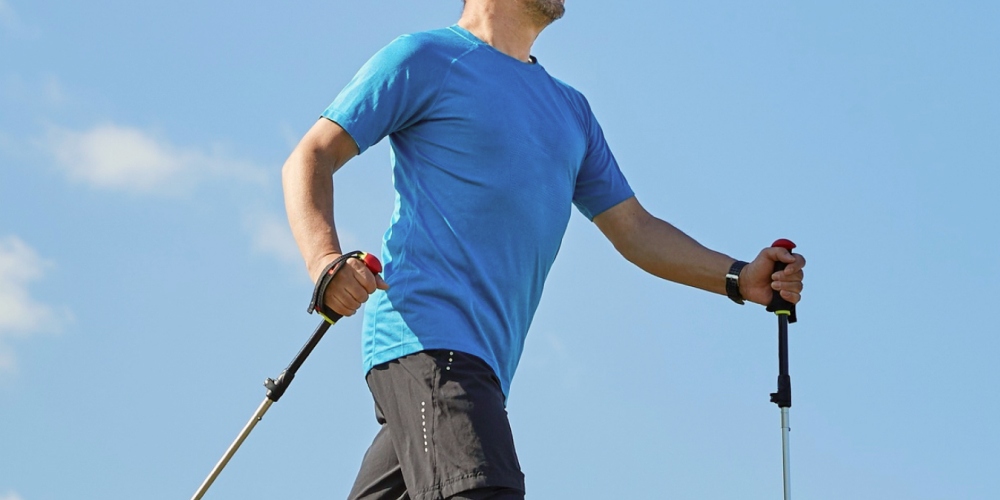
Patients affected by golfer’s elbow should first and foremost stop performing the activities that led to the development of the condition. However, professional athletes or manual workers do not always have this option. In such cases, it is worth trying to at least reduce the intensity of the activity that is causing the damage, perform it less frequently, and ensure proper recovery. Find out why is post-workout recovery as important as training.
Physiotherapy is also key as the primary method of treating tennis elbow.
Physiotherapy is primarily based on exercises for golfer’s elbow, appropriately selected for the patient’s condition, which strengthen and stretch overloaded tendons and muscles. Eccentric exercises, i.e., strength-building exercises that focus on stretching muscles under load, are helpful here. The physiotherapist may also use various manual techniques (e.g., deep tissue massage), and pain relief is also provided by:
The goal of treating golfer’s elbow is to achieve full and painless movement in the wrist and elbow.
The prognosis for golfer’s elbow is good. Conservative treatment in the form of physical therapy brings satisfactory results. Most patients can return to work or sports after completing physical therapy and making appropriate modifications to their activities.
Prevention of the condition is based, among other things, on educating the patient, who should develop an awareness of what activities (their level, intensity, or type) are not good for them and contribute to the development of golfer’s elbow.
It is also always worth taking care of work ergonomics and general health, because poor diet, diabetes, and smoking also have a significant, and in some cases even crucial, impact on the prevention and rehabilitation of golfer’s elbow.
At NAMI, we begin the treatment of golfer’s elbow with a precise assessment of the cause of the strain. We are also distinguished by our holistic approach to health. We create conditions that stimulate the body’s natural ability to regenerate. We build good habits with our patients – from a daily dose of activity and proper nutrition to reducing tension and stress. As a result, treatment does not end with temporary relief, but also reduces the risk of recurrence and benefits the whole body.
We work with both athletes and people with low levels of daily activity. We combine manual therapy with gradually modified exercises that strengthen tissue endurance. If necessary, we implement treatments selected by a physiotherapist (e.g., shock wave therapy) to help relieve pain and speed up recovery. If you have a procedure coming up, we also invite you to participate in prehabilitation.
NAMI Medical Resort and Clinic exclusively offers medical programs.
Get rid of pain and regain your fitness.

Poczytaj więcej