Update date: 16 February 2026
Publish date: 2 February 2026
Read in: 9 min
Urinary incontinence after prostatectomy is a problem that many men prefer not to talk about. Although this procedure often saves lives in the treatment of prostate cancer, it can damage the structures responsible for bladder control, including the sphincter muscles and nerves that regulate urination and erection. The risk of these conditions increases with age, especially in patients with previous urological problems. The result can be involuntary urine leakage – from slight leakage during physical exertion to serious bladder dysfunction. How to regain comfort and control after surgery?
Contents
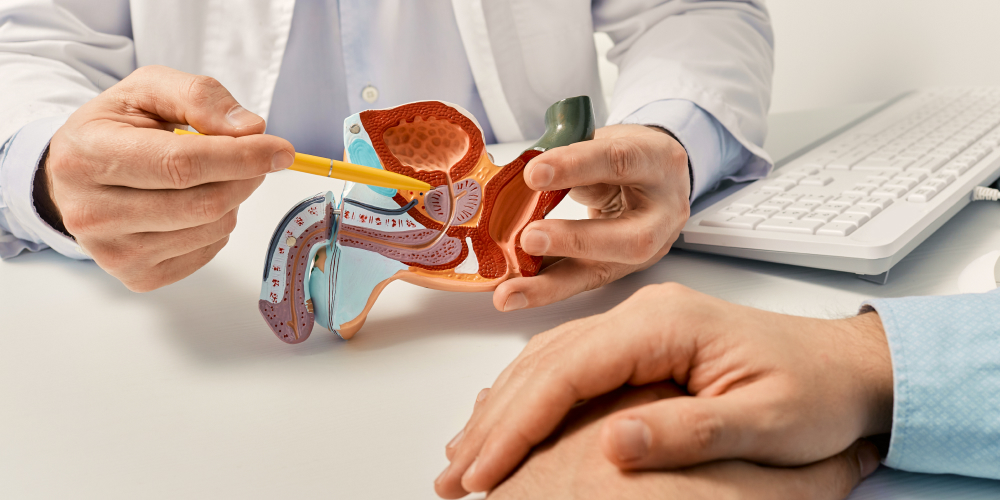
Urinary incontinence after prostate removal is one of the possible complications of surgical treatment of prostate cancer (prostatectomy). It is most often caused by weakening or damage to the mechanisms responsible for controlling urination, in particular the urethral sphincters and pelvic floor structures. It manifests itself as involuntary leakage of urine, e.g. when coughing, laughing, changing body position or during physical exertion. In most patients, these symptoms are temporary and gradually disappear as the tissues regenerate and appropriate rehabilitation is implemented.
After surgical removal of the prostate, various forms of urinary incontinence may occur, which differ in terms of their mechanism of development and severity of symptoms. The most common form is stress urinary incontinence, which involves uncontrolled leakage when coughing, sneezing, laughing or exerting oneself physically. It is associated with weakening of the urethral sphincter, which may occur as a result of surgery.
Some patients also experience urge incontinence, manifested by a sudden, difficult-to-control urge to urinate, most often resulting from bladder overactivity. Less common is overflow incontinence, caused by incomplete emptying of the bladder and its excessive filling.
In clinical practice, a mixed form is also possible, combining the characteristics of several types of urinary incontinence. Correct diagnosis of the dominant mechanism of the condition is crucial for the selection of effective therapeutic and rehabilitation measures.
The diagnosis of urinary incontinence after prostatectomy begins with a thorough medical history and assessment of the situations in which leakage occurs and how much it affects daily functioning.
The urologist usually orders basic tests and a urine culture to check whether the cause of the symptoms is an infection. They also perform an ultrasound of the urinary tract to assess whether urine remains in the bladder after urination.
If the symptoms require it, the doctor also examines the functioning of the bladder and sphincters — sometimes with the help of specialised urodynamic tests and, in selected cases, cystoscopy. This allows them to accurately determine the source of the problem and select the treatment best suited to the patient’s situation.
Regain control and comfort in your life after surgery.
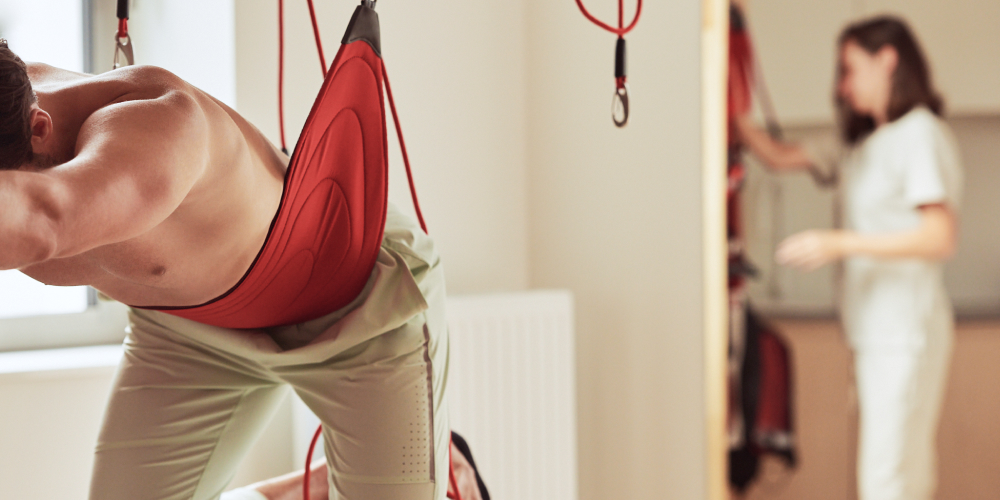
Treatment for urinary incontinence after prostate removal includes urological physiotherapy, which aims to improve sphincter function and regain control over urination. It is advisable to start rehabilitation as early as possible, preferably before the operation. Such preparation for surgery, referred to as prehabilitation, can speed up recovery and increase the effectiveness of post-operative treatment.
The pelvic floor muscles, which are responsible for closing the urethra and keeping urine in the bladder, play a key role in maintaining control over urination. After prostatectomy, their function may be temporarily impaired, both as a result of surgical intervention in the tissues and muscle weakness. Therefore, an important part of therapy is also patient education and learning how to properly tense and relax the pelvic floor muscles. Many men are initially unable to consciously activate these structures, so in such situations, working with an experienced urological physiotherapist is very helpful.
As part of urinary incontinence therapy, a specialist performs a comprehensive assessment, including body posture, breathing pattern, abdominal and diaphragmatic tension, and pelvic floor muscle function. They analyse contraction strength, resting tension, muscle endurance and their ability to fully relax. The assessment can be performed by palpation (rectal examination), using an EMG probe or ultrasound. Based on this, an individual treatment plan is developed.
The next stage involves pelvic floor muscle exercises, including both phasic contractions, aimed at improving strength, and tonic contractions, which develop endurance. However, training is not limited to exercises performed in the clinic. The patient learns to activate the pelvic floor muscles in everyday situations, such as coughing, sneezing, lifting heavy objects or climbing stairs. An important element of the therapy is also the synchronisation of muscle work with breathing – correct activation usually takes place during the exhalation phase. The exercises are performed in various positions: lying down, sitting, standing and walking.
Methods that support muscle control training, such as biofeedback, can also be helpful in treating urinary incontinence. Thanks to specialised devices, patients can observe muscle activity in real time, which facilitates learning correct movement patterns and increases motivation, especially at the beginning of therapy. As progress is made, the patient gradually moves on to exercises without the use of equipment, using proprioception techniques and working on body awareness.
Therapy may also include manual techniques focused on working with muscle, fascial and nerve tissues in the pelvic area. Their aim is to reduce excessive tension, improve circulation and optimise healing conditions. Working with the post-operative scar is also an important element – if it restricts tissue mobility, it can indirectly affect the functioning of the pelvic floor muscles. Proper scar mobilisation and work on deep tissues can significantly improve the patient’s quality of life.
Urinary incontinence, a common consequence of prostatectomy, does not have to lead to a permanent reduction in quality of life. Thanks to the early implementation of specialist physiotherapy, based on reliable diagnostics and proven therapeutic methods, it is possible to regain control over the bladder and gradually return to everyday activities.
At NAMI, rehabilitation is carried out in a safe, discreet manner, tailored to the individual pace of the patient’s recovery. We focus not only on reducing symptoms, but also on providing comprehensive support for physical fitness, mental comfort and rebuilding self-confidence – so that men can return to their professional, social and intimate activities without feeling restricted.
NAMI Medical Resort and Clinic exclusively offers medical programs.
Have you undergone prostate removal surgery?

Read more