Update date: 16 March 2026
Publish date: 6 March 2026
Read in: 17 min
Tennis elbow is the colloquial name for a condition that causes pain on the outside of the elbow. We explain exactly what tennis elbow is, its causes and symptoms, and how it can be effectively treated and rehabilitated.
Contents
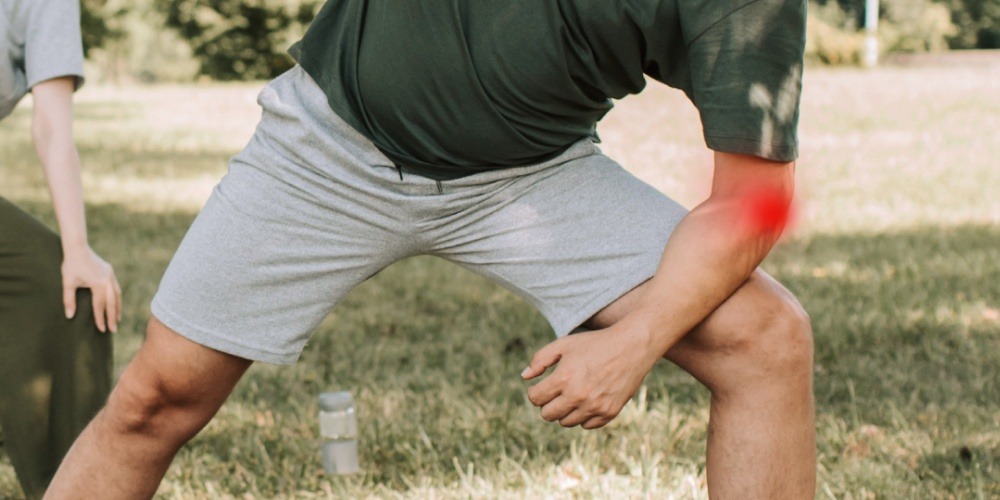
Tennis elbow is the colloquial name for a clinical diagnosis describing pain in the lateral compartment of the elbow or the common extensor tendon of the elbow joint (i.e., lateral epicondylitis of the humerus). Simply put, a person affected by this condition feels pain on the outside of the elbow, and the pain is the result of overuse of the tendons used to straighten the wrist and fingers.
Tennis elbow is most often the result of overuse of the muscles and tendons attached to the outer part of the elbow.
People aged 40-50, athletes, and manual workers who perform repetitive elbow movements are most at risk for this condition.
The repetitive movements that most often contribute to tennis elbow are:
Tennis elbow is a common condition among patients who play tennis, squash, and badminton, or those who practice similar sports. During medical interviews, athletes often report that elbow pain appeared after they used new equipment or increased the intensity and/or duration of their training. Therefore, in order to prevent repetitive strain, athletes should pay special attention to using the correct technique and carefully select the equipment they use.
The condition can also develop as a result of a high dose of new activity. Let’s say someone who does not do physical work on a daily basis is renovating their apartment and uses a hammer for 10 hours. In such a situation, they may well develop tennis elbow. A sharp injury or strain (e.g., lifting a heavy object or hitting a strong backhand in tennis) can also cause this condition. The pain usually appears within 1 to 3 days after the strain.
The first symptom of tennis elbow is pain on the outside of the elbow. This pain can vary in intensity.
Sometimes it is relatively mild and only occurs during activities that exacerbate the strain, such as playing tennis or working with various hand tools.
Other patients struggle with severe pain that prevents them from functioning on a daily basis. Simple activities, such as lifting and holding a cup of coffee, cause them great discomfort.
Patients with tennis elbow may also notice that they are unable to grip objects with the same strength as usual. They may also feel pain when touching the lateral epicondyle, i.e., the hard bump on the outside of the elbow. In addition, the pain associated with this condition often radiates toward the wrist and hand.
Effective physical therapy and dedicated treatments.
Usually, a diagnosis can be made based on the patient’s description of the symptoms listed above and a palpation (touch) examination.
In the case of tennis elbow, the patient does not experience numbness, tingling, or other radicular symptoms (associated with compression or irritation of the nerve roots). However, if these symptoms are present, it may suggest a different diagnosis, such as radial nerve entrapment. It is also possible that tennis elbow coexists with another condition.
An orthopedist may order additional imaging tests to rule out other conditions and check whether there is calcification at the site of the tendon damage and whether the tendon has become unnaturally hard and thick. Additional tests will also help to observe changes in the arrangement of collagen fibers.
If the patient is struggling with tennis elbow, a palpation (tactile) examination usually causes some pain. The discomfort is most severe when the doctor touches a specific point above the lateral epicondyle or 1-2 cm below the epicondyle itself.
During the examination, the doctor may also notice that the muscle responsible for straightening the wrist and fingers is clearly tense.
The patient feels pain or the pain increases when straightening the wrist, especially with the elbow straight and the forearm in a pronated position (the arm rotated so that the thumb is pointing down and the little finger is pointing up).
Increased strain on the tendon also makes it extremely painful to straighten the middle finger with the elbow extended.
If, based on the medical history and/or physical examination (including observation of the patient’s movement, touch, percussion, auscultation), the doctor suspects other injuries or conditions (separate or coexisting with tennis elbow), they may recommend that the patient undergo a series of X-rays of the elbow (anterior-posterior and lateral). The doctor may look for, among other things, coexisting degenerative joint changes, fractures, tumors, or bursitis.
In some cases, the doctor also orders an ultrasound, as it helps him determine the direction of local treatment.
Ultrasound and magnetic resonance imaging are also used if non-surgical treatment of tennis elbow does not produce satisfactory results. In such cases, the doctor uses these tests to check whether the patient has torn a tendon or ligament, or whether they have a stress fracture or cartilage and bone loss.
Some patients wonder if untreated tennis elbow will go away on its own. Indeed, in the typical course of this condition, the pain and other symptoms become milder over time. However, it is not worth waiting for the symptoms to go away on their own, as untreated tennis elbow can last up to 2 years. Meanwhile, there are treatment methods that effectively shorten the duration of the condition and reduce the intensity of the symptoms. This is a simple way to achieve significant relief.

Patients often take non-steroidal anti-inflammatory drugs to help relieve pain, but unfortunately, these do not address the cause of the condition. In the case of tennis elbow, each patient should first and foremost avoid excessive and unusual physical activity that is harmful to them and ensure proper recovery after training. It is worth observing your body, its reactions, and the level of pain you feel during specific activities. This will help you set a limit on movement that should not be exceeded in order to avoid causing or aggravating the condition.
However, observation and avoidance of excessive activity alone are not always enough. Much better results can be achieved by implementing appropriately selected exercises for tennis elbow, and the proper treatment is stretching and muscle strengthening therapy under the supervision of an experienced physical therapist. Therefore, home remedies for tennis elbow (e.g., painkillers or cold compresses) should definitely be replaced by working with a specialist.
Tennis elbow is a self-limiting condition, which means that the patient’s condition improves on its own over time, but the pain can persist for up to two years. Physiotherapy helps to reduce the annoying symptoms more quickly and restore fitness, which is why doctors recommend this type of rehabilitation for tennis elbow to patients as a first step.
The basic therapy consists of carefully selected exercises for tennis elbow.
Acupuncture, shock wave therapy, and an experienced team.
The exercises for tennis elbow that a given patient should perform depend, among other things, on the severity of the condition and its exact cause. Improperly selected therapy can actually worsen the condition. That is why it is so important to work under the supervision of an experienced physical therapist who will assess the patient’s overall condition and select the appropriate solutions.
Specialists use various methods to rehabilitate tennis elbow. These include mobilization through movement, a physiotherapy technique involving controlled, smooth movements in the joint or surrounding tissues to improve their mobility and reduce pain.
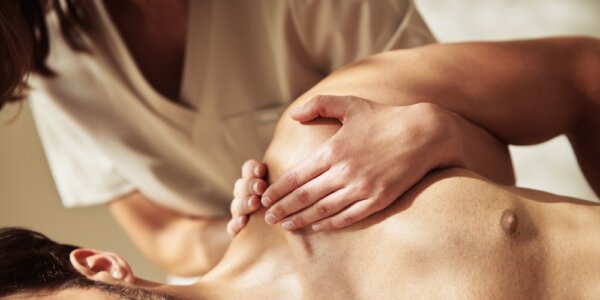
Myofascial methods (e.g., fascial massage) are also often used in therapy to relax tense muscles and fascia, improve tissue elasticity and circulation, and relieve pain.
Occupational therapy can also be helpful, i.e., various exercises to improve the patient’s coordination, agility, muscle strength, and manual skills, making it easier for them to perform simple, everyday activities.
Progress is measured, among other things, by checking whether the patient can perform an increasingly stronger hand grip without feeling pain.
The physical therapist also selects different exercises depending on the stage of treatment:
At the NAMI Medical Resort and Clinic, we focus not only on reducing pain and strengthening the patient’s muscles and tendons. We teach how to independently select the optimal level of movement and engage in physical activity that benefits the whole body. We work with both athletes and people with low levels of daily activity.
In addition to exercise, various treatments can also be used as part of tennis elbow rehabilitation, including:
It is worth working with an experienced physiotherapist who will assess which rehabilitation treatments for tennis elbow will be a good complement to the overall therapy. At the NAMI Medical Resort and Clinic, patients can exercise under the supervision of a specialist and undergo the recommended treatments. The center has rehabilitation equipment used in the treatment of tennis elbow.
Sometimes patients ask about the possibility of steroid injections. They do indeed have an anti-inflammatory effect and, above all, provide pain relief. However, like non-steroidal anti-inflammatory drugs, they do not treat the cause of the condition and, what is more, they weaken collagen fibers. Therefore, in the case of tennis elbow, they should be avoided because in the long term they have worse effects than simply resting and waiting for the symptoms to subside on their own.
Surgery for tennis elbow is the last resort and should only be considered when other options have not produced satisfactory results. However, it should also be remembered that it has not been proven that surgical treatment produces better results than working with a physical therapist or even waiting for the condition to resolve on its own. In the case of this condition, physical therapy usually produces the best results and should be offered as the first treatment method.
Physical therapy is the basis for the treatment of tennis elbow, and treatments such as shock wave therapy or acupuncture effectively support it. The therapy can also be supplemented with a special compression bandage that supports the joint and reduces the strain on the tendons. However, the use of such an elbow brace for tennis elbow should be consulted with a specialist, as wearing it for too long can lead to muscle weakness.
Another method that supports treatment is elbow taping, which involves applying special tapes to the skin. Sometimes, to support the effects of physiotherapy, patients also supplement collagen, which is the most important building block of ligaments, tendons, and connective tissue. However, this should not be the basis of treatment, but only a possible supplement to it.
At NAMI, we focus on accurate diagnosis. We develop an individual treatment plan tailored to the needs and condition of each patient. We know that the best results are achieved through a comprehensive approach to therapy, which is why at our center, regardless of the nature of the patient’s condition, we also select the right diet and reduce stress.
We work with experienced physical therapists who recommend appropriate exercises, modify them as needed, and supervise the patient’s rehabilitation. The therapy is complemented by additional treatments recommended by the physical therapist to help relieve pain and return to fitness faster. If you are scheduled for a procedure, take advantage of our prehabilitation program.
NAMI Medical Resort and Clinic exclusively offers medical programs.
Get rid of pain and regain fitness.

Poczytaj więcej